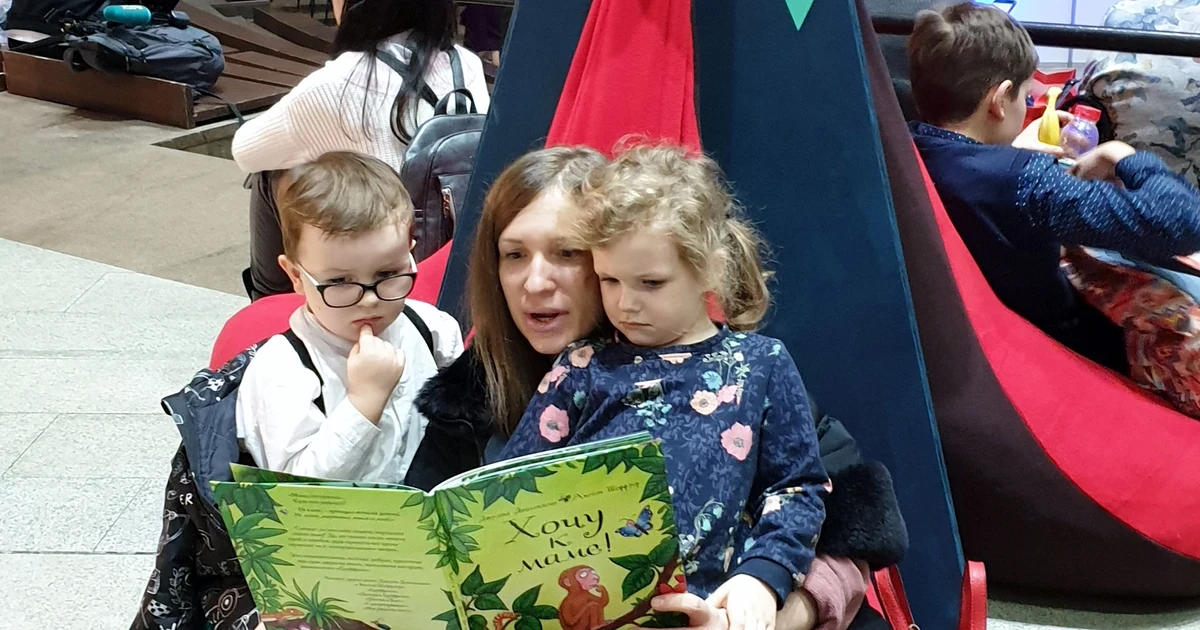

The best 2026 Black Friday homeschool writing and grammar deals offer 15% to 35% discounts on structured composition programs, multi-sensory spelling sets, and video grammar instruction through Cyber Monday.[1] Our guide reviews verified promotional savings, compositional philosophies, and multi-sensory tools so you select the ideal curriculum to develop confident, articulate student writers.[1][2]
Teaching written expression is widely recognized by home educators as one of the most emotionally fraught instructional responsibilities.[1] Reluctant writers often stare at blank pages in tears, paralyzed by the simultaneous cognitive demands of handwriting, spelling, vocabulary selection, and organizational syntax.[2] Late November represents the prime window for families to invest in professional writing curricula, video courses, and phonetic spelling kits that break writing down into manageable, incremental steps.[1][3]
Comparing 2026 Homeschool Writing & Grammar Deals
Every promotion listed below is tracked continuously in our live 2026 Black Friday Homeschool Deals Tracker through Cyber Monday midnight.[1]
| Curriculum / Publisher | Pedagogical Focus | Verified 2026 Black Friday Offer | Promo Window / Code |
|---|---|---|---|
| IEW (Structure and Style) | Model-Based Scaffolded Composition[1] | Free Domestic Shipping + Streaming Gifts[1] | Holiday Event (Nov 30)[1] |
| WriteShop | Creative Prompt & Guided Pre-Writing[2] | Up to 25% Off Video Lessons & Course Sets[2] | Cyber Week Portal[2] |
| All About Spelling | Orton-Gillingham Multi-Sensory Rules[3] | Bundle Savings + Reduced Shipping[3] | Direct Portal Promotion[3] |
| First Language Lessons | Classical Narration & Auditory Chants[4] | 20% Off Well-Trained Mind Audio & Books[4] | Site-Wide Holiday Sale[4] |
| Analytical Grammar | Diagramming & Systematic Sentence Parsing[5] | 15% Off Middle & High School Sets[5] | Distributor Holiday Promos[5] |
Composition Philosophies: Structural Scaffolding vs Creative Discovery
Selecting an effective writing curriculum begins with identifying your student’s cognitive temperament and writing hurdles.[1] Two major instructional philosophies dominate the homeschooling landscape.[1][2]
IEW Structure and Style: The Systematic Checklist Method
Developed by Andrew Pudewa, the Institute for Excellence in Writing (IEW) utilizes a master-apprentice model that eliminates the terror of the blank page.[1] Rather than asking young children to invent ideas from scratch, IEW begins with pre-written source texts.[1] Students learn to extract a “Key Word Outline” by selecting three significant words per sentence, then reconstruct the passage in their own voice.[1]
As students advance through the nine structural units, IEW introduces objective stylistic techniques: “-ly” adverbs, strong verbs, quality adjectives, because-clauses, and varied sentence openers.[1] Every composition is graded against an objective, unambiguous checklist, eliminating subjective arguments between parent and child.[1] During Black Friday, IEW’s annual holiday promotion provides free shipping on bulky physical teacher manuals and streaming video boxes, saving families significant delivery costs.[1]
WriteShop: Gentle Tactile Pre-Writing and Creative Prompts
For children who rebel against formulaic checklists and crave imaginative freedom, WriteShop offers a playful, incremental alternative.[2] WriteShop Primary (grades K through 3) and Junior (grades 3 through 6) emphasize tactile pre-writing activities, incorporating graphic organizers, paper plate spinners, mystery bags, and guided oral brainstorming.[2]
Parents act as scribes in early levels, capturing the child’s rich verbal storytelling without letting slow handwriting stifle creativity.[2] The curriculum teaches children how to brainstorm, draft, edit with colored highlighters, and publish their writing in creative formats, such as folded accordion books or illustrated posters.[2] Their Black Friday video lesson discounts provide structured video instruction that guides children through the writing process independently.[2]
Pro Tip: If your student struggles with dysgraphia or physical handwriting fatigue, separate writing composition from physical handwriting. Allow the student to dictate paragraphs using speech-to-text software or a keyboard during the drafting phase, focusing purely on compositional syntax before editing mechanics.[2]
Multi-Sensory Spelling: All About Spelling
Traditional weekly spelling tests—where children memorize 20 arbitrary words on Monday only to forget them by next Tuesday—fail to teach the underlying logic of the English language.[3]
All About Spelling (AAS) by Marie Rippel applies the proven Orton-Gillingham methodology, teaching spelling as a logical system governed by reliable phonetic rules.[3] Children use color-coded magnetic or digital letter tiles to physically segment words into phonograms, understanding why “cat” begins with a C while “kitten” begins with a K.[3]
The program is mastery-based rather than grade-based, ensuring students never advance until rules are permanently retained.[3] Multi-sensory flashcards review phonograms, sound cards, and syllable division patterns continuously.[3] Black Friday package bundles allow families to purchase multiple levels simultaneously at reduced rates.[3]
Grammar Foundations: Classical Chants vs Analytical Diagramming
A solid understanding of English grammar empowers students to construct complex, persuasive sentences and edit their own writing with confidence.[4][5]
First Language Lessons: Auditory and Classical Narration
Developed by Jessie Wise and Susan Wise Bauer, First Language Lessons for the Well-Trained Mind introduces elementary children to parts of speech through rhythmic auditory chants, poetry memorization, and oral narration.[4] Children recite definitions (“A noun is the name of a person, place, thing, or idea”) until they become second nature.[4] Short, scripted five-minute lessons make it effortless for busy parents to teach without preparatory stress.[4]
The Five-Paragraph Essay vs Exploratory Non-Fiction
As students enter middle and secondary education, composition instruction often faces tension between the rigid five-paragraph essay model and exploratory non-fiction writing.[1] While the traditional introductory thesis, three body paragraphs, and clincher conclusion provides helpful structural training for timed standardized assessments like the SAT or ACT, relying exclusively on this formula can stifle original rhetorical analysis.[5]
Advanced programs like IEW’s upper levels and WriteShop’s high school editions bridge this gap by teaching students how to adapt their organizational framework to the specific rhetorical purpose.[1][2] Students learn persuasive editorial argumentation, comparative literary critiques, and scientific lab reporting, mastering stylistic transitions and evidence integration without sounding robotic or formulaic.[1]
Constructive Feedback: Fostering Growth Over Perfection
A primary benefit of homeschool writing instruction is the opportunity for individualized editorial mentorship.[2] In a crowded traditional classroom, teachers rarely have time to sit beside an author to discuss word nuance or structural flow.[2] Home educators can conduct weekly writing conferences, celebrating vivid metaphors and strong verbs while gently coaching the student through awkward phrasing.[1] Viewing writing as a multi-stage craft—brainstorming, drafting, revising for style, and polishing mechanics—teaches children that great writers are not born; they are developed through patient, supportive iteration.[1][2]
Analytical Grammar: The Logic of Sentence Diagramming
For middle and high school students, Analytical Grammar teaches syntax through a systematic, finite framework.[5] Rather than repeating identical grammar worksheets year after year, the program is divided into three focused seasons.[5] Students master the grammatical function of every word in complex literature through sentence diagramming, transforming abstract grammatical concepts into visual, geometric architecture.[5]
Common Mistake: Marking every single mechanical and grammatical error with red ink on a child’s early writing draft. Over-correcting crushes a young writer’s confidence. Focus editing feedback on one specific skill target per paper—such as capitalizing proper nouns or adding descriptive adjectives—leaving other imperfections for future lessons.[1][2]
Actionable Writing & Grammar Buying Checklist
- Assess Writer Hesitancy: Determine whether your child needs formulaic outline scaffolding (IEW) or tactile creative brainstorming (WriteShop).[1][2]
- Lock In Free Holiday Shipping: Order heavy physical teacher binders and student workbooks during IEW’s Black Friday shipping promotion.[1]
- Adopt Rule-Based Spelling: Replace arbitrary word lists with Orton-Gillingham phonetic instruction like All About Spelling.[3]
- Incorporate Systematic Grammar: Introduce sentence diagramming and parts-of-speech parsing through First Language Lessons or Analytical Grammar.[4][5]
- Equip Audio-Visual Tools: Invest in speech-to-text dictation tools or typing software to support kinesthetic and dysgraphic learners.[2]
Equipping your homeschool with structured writing and grammar tools transforms tearful composition sessions into proud literary achievements. Monitor all holiday curriculum markdowns live in our 2026 Black Friday Homeschool Deals Tracker through Cyber Monday midnight.[1]
Sources & Official References (5)
- Institute for Excellence in Writing (IEW): Structure and Style — Official provider of Structure and Style video writing courses, Fix It! Grammar, and phonetic spelling programs ↩
- WriteShop: Incremental Writing Curriculum for Kids — Award-winning creative writing curricula, teacher guides, and video lessons for reluctant and gifted writers ↩
- All About Learning Press: All About Spelling Program — Orton-Gillingham-based multi-sensory spelling rules, letter tiles, and mastery flashcards ↩
- Well-Trained Mind Press: First Language Lessons & Writing With Ease — Classical grammar and narration curricula developed by Susan Wise Bauer and Jessie Wise ↩
- Analytical Grammar: Systematic English Grammar Mastery — Sequential grammar and sentence diagramming program designed for upper elementary and secondary students ↩