
Under Connecticut General Statutes (C.G.S.) § 10-184, parents possess the clear constitutional right to instruct their children at home, provided they show that the child is "elsewhere receiving equivalent instruction in the studies taught in the public schools"[1]. While the Connecticut State Department of Education (CSDE) issues voluntary administrative policies, understanding your statutory rights versus advisory recommendations is essential for protecting family autonomy and privacy[2].
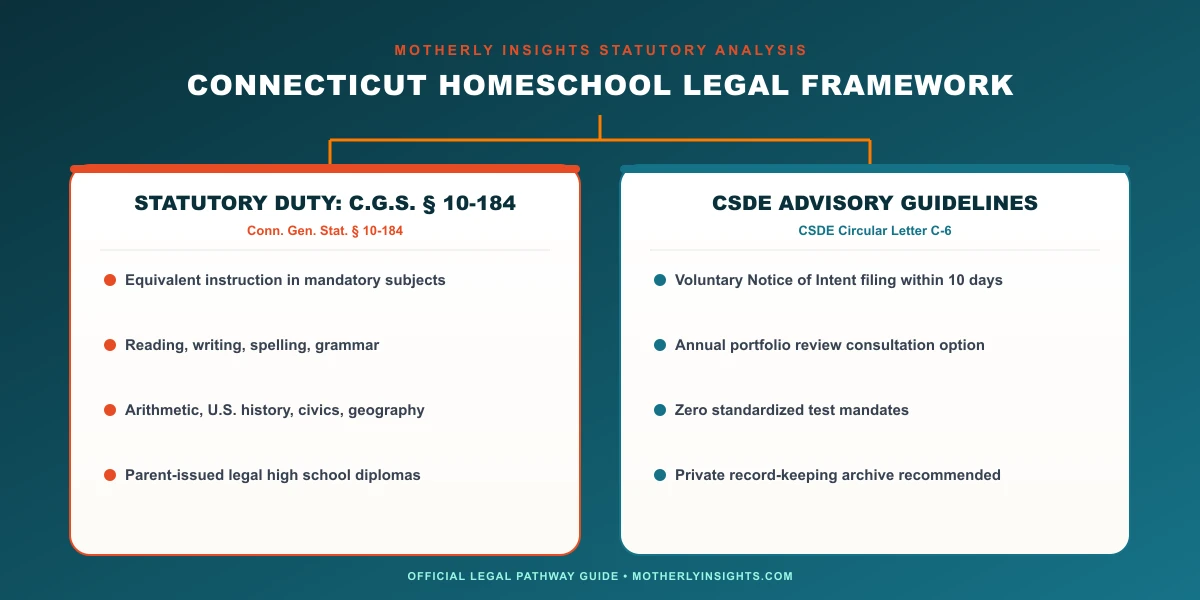
Figure 1: Statutory overview of Connecticut home instruction subjects and guidelines.
Statutory Authority: Understanding C.G.S. § 10-184
Connecticut's compulsory education statute, C.G.S. § 10-184, governs school attendance for children between the ages of five and eighteen. The statute places the primary educational duty upon parents: "All parents and those who have the care of children shall bring them up in some lawful and honest employment and instruct them or cause them to be instructed in reading, writing, spelling, English grammar, geography, arithmetic and United States history and in citizenship, including a study of the town, state and federal governments."
Crucially, the statute contains an explicit parental exemption clause: compulsory public school attendance does not apply if the parent can establish that the child is "receiving equivalent instruction in the studies taught in the public schools." Connecticut law establishes no statutory requirement for parents to hold a teaching certificate, possess a college degree, seek prior school board approval, or submit their children to mandatory state standardized testing.
CSDE Guidelines: Statutory Law vs. Advisory Policy (Circular Letter C-6)
A frequent source of confusion among Nutmeg State parents is the distinction between statutory law passed by the General Assembly and advisory guidelines published by the State Department of Education. In 1994, the CSDE issued Circular Letter C-6 (commonly referred to as the State Board of Education Policy on Home Instruction)[3].
Circular Letter C-6 suggests two administrative procedures:
- Filing a Notice of Intent: Submitting an annual Notice of Intent form to the local district superintendent within ten calendar days of commencing home instruction.
- Annual Portfolio Review Meeting: Participating in an annual year-end meeting with local school district staff to review a portfolio of student work samples.
However, the Connecticut State Supreme Court and successive legal analyses have affirmed that Circular Letter C-6 represents advisory policy recommendations, not legally binding mandates. The CSDE cannot create law through an administrative circular. Many Connecticut families choose to file the voluntary Notice of Intent to maintain cordial communication with their local district, while other families choose to retain their records independently at home. If a family chooses not to file, the school board has no legal recourse unless it initiates formal truancy proceedings and proves in court that the child is receiving zero instruction.
Mandatory Subject Areas Required by Connecticut Statute
C.G.S. § 10-184 specifies exact statutory subjects that home educators must provide throughout the school term:
- Reading & Literature: Foundational phonemic awareness, vocabulary development, and classic literature study.
- Writing & Composition: Penmanship, creative composition, and expository essay writing.
- Spelling & English Grammar: Orthography, parts of speech, and sentence diagramming or mechanics.
- Arithmetic & Mathematics: Elementary numeracy, fractions, decimals, algebra, geometry, and consumer finance.
- Geography: Physical, cultural, and political geography of Connecticut, the United States, and world regions.
- United States History: American founding principles, the Revolutionary era, the Civil War, and modern 20th-century history.
- Citizenship & Government: Town government operations, Connecticut state constitution, and federal civic duties.
Parents enjoy total freedom to select textbooks, literature living books, or digital platforms. You are not required to follow the Connecticut Core Standards or adopt public school curriculum materials.
Compulsory Attendance Ages & The Kindergarten Opt-Out Option
In Connecticut, compulsory attendance begins at age five and extends until age eighteen. However, the legislature built in two vital parental rights regarding age requirements under C.G.S. § 10-184:
- The 5-Year-Old Opt-Out: Parents have the statutory right not to enroll a five-year-old child in kindergarten. To exercise this right, the parent must visit the local school district central office and sign a simple, one-page option form declaring their decision to withhold the child until age six.
- The 6-Year-Old Opt-Out: Parents also hold the legal right to withhold a six-year-old child from first grade until age seven by signing the same statutory option form at the local school office.
- High School Withdrawal (Ages 17-18): A student who has reached age seventeen may legally withdraw from high school with written parental consent signed in person at the school district office.
Withdrawing an Enrolled Student from a Connecticut Public School
If your child is actively attending a Connecticut public or magnet school, formal withdrawal is essential to close their attendance file and prevent unexcused truancy inquiries:
- Draft a Formal Withdrawal Letter: Provide a clear written statement to the school principal informing them that your student is being withdrawn to receive instruction elsewhere pursuant to C.G.S. § 10-184.
- Request Official Cumulative Records: In your withdrawal letter, request copies of your child's cumulative academic transcripts, standardized test records, and medical/immunization files.
- Decide on Notice of Intent Filing: If you choose to follow the CSDE advisory guidelines, submit your completed Notice of Intent form to the superintendent within ten days of withdrawal.
High School Graduation, Diplomas, and College Admissions
In Connecticut, home educators hold the exclusive authority to set high school graduation requirements, assign course credits, and award high school diplomas. Under state law, parent-issued diplomas and transcripts are fully recognized legal credentials:
- UConn and State University Admissions: The University of Connecticut (UConn), the Connecticut State University system (Central, Eastern, Southern, Western), and premier private universities (such as Yale, Wesleyan, and Trinity) regularly admit home-educated students based on transcripts and SAT/ACT scores.
- PACT Tuition-Free Community College: Connecticut homeschooled graduates qualify for the state's PACT program (Pledge to Advance Connecticut), which provides debt-free tuition at all twelve regional community college campuses for eligible high school graduates.
- Military & Workforce Status: The United States Armed Forces enlist Connecticut homeschool graduates as Tier 1 recruits on equal footing with public school graduates.
Extracurriculars and CIAC Interscholastic Sports
Participation in public school interscholastic sports governed by the Connecticut Interscholastic Athletic Conference (CIAC) is determined by local school board policy:
- Local District Discretion: Under CIAC regulations, individual local boards of education hold the authority to decide whether homeschooled students may participate on public school athletic teams (soccer, cross country, basketball, baseball, track).
- Inquiring with Your District: Parents should consult their local board of education policy manual to determine local participation guidelines.
- Independent Youth Sports Leagues: Connecticut features an extensive network of competitive club soccer teams, AAU basketball circuits, rowing clubs, and homeschool athletic organizations.
Recommended Homeschool Record-Keeping Standards
To maintain a proactive legal shield and streamline portfolio review meetings or college applications, maintain an organized "Master Homeschool Binder" containing:
- State Communications Archive: A copy of your filed Notice of Intent and the superintendent's acknowledgment letter (if submitted).
- Annual Attendance Log: A record confirming approximately 180 days or 900 hours of active instruction.
- Curriculum Syllabi & Booklists: A list of all textbooks, literature titles, online learning platforms, and instructional software utilized.
- Representative Student Work Samples: Dated writing assignments, math exams, and lab reports collected across the school term.
- Cumulative High School Transcript: For grades 9 through 12, an ongoing transcript detailing Carnegie course credits, letter grades, and GPA calculations.
Frequently Asked Questions About Connecticut Homeschool Laws
Are Connecticut homeschoolers required to take standardized tests?
Is filing the CSDE Notice of Intent legally mandatory in Connecticut?
Do parents need a teaching license or college degree to homeschool in Connecticut?
Can Connecticut homeschooled students play sports at their local public high school?
What is the compulsory attendance age in Connecticut?
Are parent-issued diplomas accepted by Connecticut universities and employers?
💡 Related Educational Pathways: To compare legal requirements in neighboring states, explore our comprehensive guides on Massachusetts homeschool approval policies, New York IHIP regulations, and New Jersey equivalent instruction rights.
💡 Related Educational Pathways: To compare related legal frameworks and recommended study programs, explore our detailed reviews on California homeschool legal guidelines, Ohio homeschool notification regulations, Pennsylvania Act 169 requirements.